





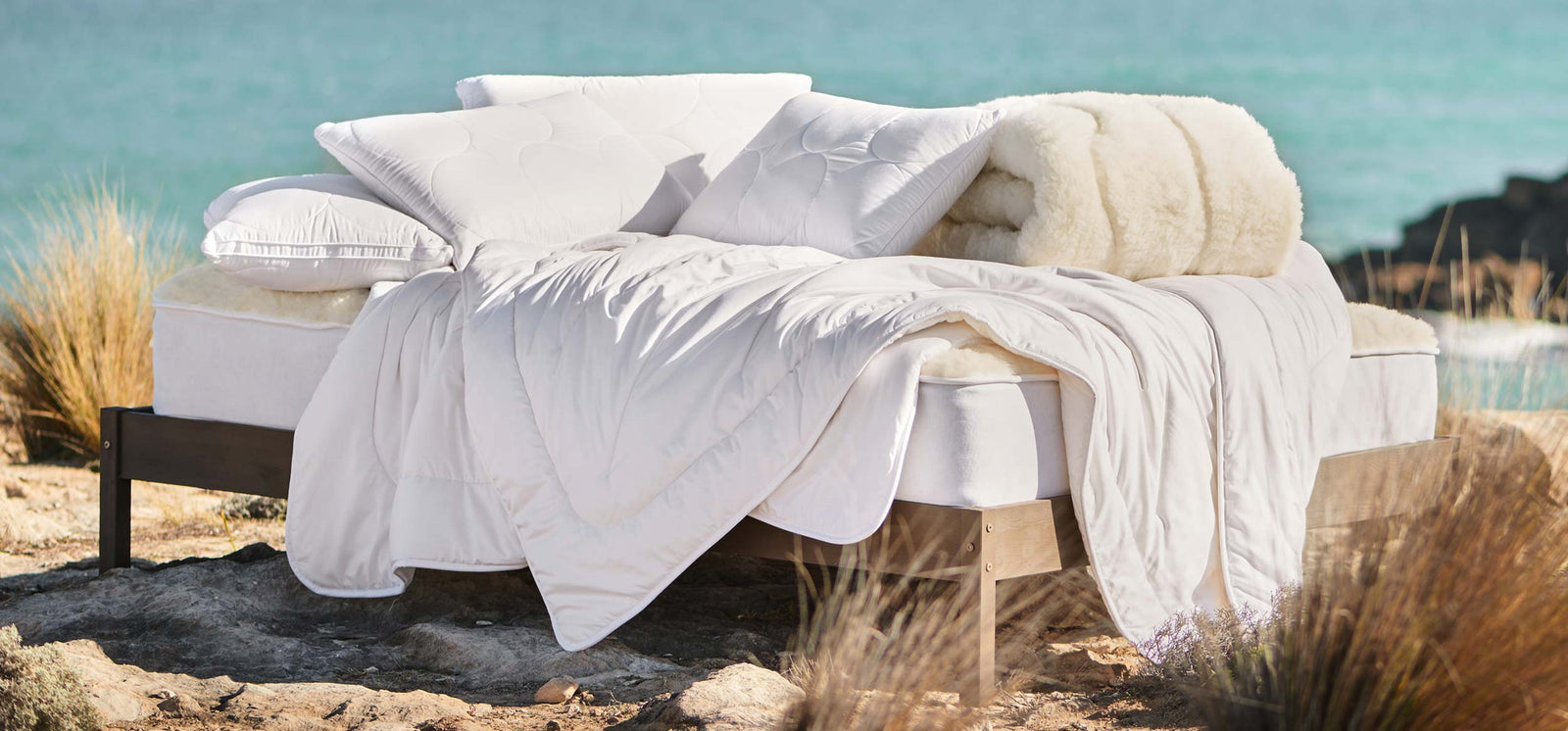

Why Hot Sleep Happens and Why It’s Not Your Fault
Overheating at night is one of the most common sleep disruptors. And while it’s easy to blame hormones, weather or stress, the real cause is often simpler: your bedding is trapping heat your body is trying to release.
Here’s what the science says:
1. We Sleep Best When Our Core Temperature Drops
To fall into deep sleep, your core temperature needs to lower by around 1°C.
If heat builds up and your body can't disperse it, your brain triggers micro-wake-ups to cool you down even if you don’t remember them. That’s why you wake up tired despite 8 hours in bed.
2. Synthetics Create a “Heat + Humidity Bubble”
Materials like polyester and memory foam:
- Trap heat next to the body
- Block airflow
- Hold onto moisture rather than releasing it
This creates a humid “sauna effect” that prevents natural cooling and causes sweating.
3. Wool Does the Opposite, It Regulates Your Temperature
Wool fibres have a unique structure that allows them to breathe, exchange heat and move moisture away from the skin.
When you’re warm, wool draws heat and moisture away to cool you.
When you’re cool, wool traps warmth to keep you comfortable.
It’s responsive, natural climate control tailored to your body.
4. You Sleep Deeper When Your Temperature Stays Stable
Once your body hits the optimal sleep temperature, deep sleep cycles become longer and more consistent, supporting recovery, mood, memory and immune function.
That’s why many people describe switching to wool bedding.
Now it’s time to Build a Cooler Bed This Summer
For the biggest difference in heat control, start with the products closest to your body:
- A wool quilt for breathable insulation
- A temperature-regulating pillow to prevent head heat buildup
- A wool mattress topper for airflow from below
Together, they create a cooling sleep environment without fans, tech or AC.


